
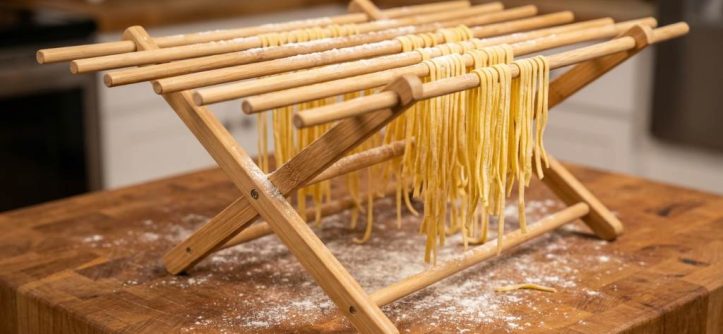
Bamboo kitchen tools continue to grow in popularity across the USA because of their natural appearance, durability, and eco friendly design. According to market research, bamboo kitchen products have experienced steady annual growth due to increased consumer interest in sustainable household items. Proper maintenance helps preserve their quality and extends their lifespan significantly. If you own bamboo pasta drying racks, understanding the correct cleaning methods can prevent mold, odors, and structural damage. This guide explains exactly how to clean bamboo pasta drying racks safely and effectively while maintaining their natural beauty and performance.
Why Proper Cleaning Matters for Bamboo Pasta Drying Racks
Bamboo is naturally durable, but it remains a porous material. Therefore, improper cleaning methods can cause warping, cracking, or mildew growth.
Fresh pasta often leaves behind starch residue and moisture. Consequently, regular cleaning prevents bacteria buildup and unpleasant odors.
Proper care also helps preserve the rack’s appearance. Additionally, it extends the lifespan of your kitchen equipment.
Understanding the Structure of Bamboo Pasta Drying Racks
Most bamboo pasta drying racks feature multiple arms attached to a central support structure. These components create several areas where moisture and food particles can accumulate.
Unlike plastic or stainless steel racks, bamboo requires gentle maintenance. Therefore, avoiding harsh chemicals becomes essential.
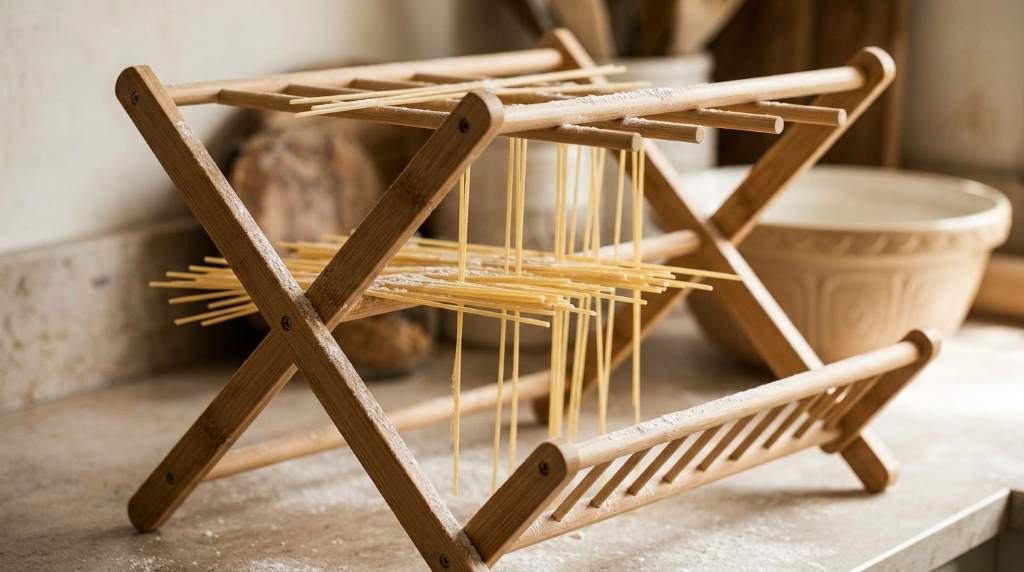
Common Areas That Collect Residue
- Drying arms and rods
- Joint connections
- Folding hinges
- Base supports
- Storage grooves
Supplies Needed to Clean Bamboo Pasta Drying Racks
Gathering the right supplies ensures safe and effective cleaning. Fortunately, most items are already available in typical American households.
- Warm water
- Mild dish soap
- Soft microfiber cloth
- Soft bristle brush
- White vinegar
- Clean towels
- Food grade mineral oil
How to Clean Bamboo Pasta Drying Racks After Every Use
Routine cleaning prevents residue accumulation and minimizes deep cleaning requirements. Moreover, it only takes a few minutes.
Step 1: Remove Loose Debris
Begin by shaking the rack gently over a sink or trash bin. This process removes dried flour and pasta fragments.
Next, inspect the joints and corners carefully. Small particles often hide in these areas.
Step 2: Wipe with Warm Soapy Water
Mix a few drops of mild dish soap with warm water. Then dampen a soft cloth with the solution.
Wipe every surface carefully without soaking the bamboo. Excess moisture can damage natural fibers.
Step 3: Clean Difficult Areas
Use a soft bristle brush for joints and narrow spaces. Brush gently to avoid scratching the bamboo surface.
Pay particular attention to folding mechanisms. These areas often trap moisture and starch.
Step 4: Dry Immediately
Use a clean towel to remove all remaining moisture. Afterwards, allow the rack to air dry completely.
Place it in a well ventilated area. Avoid direct sunlight exposure during drying.
How to Deep Clean Bamboo Pasta Drying Racks
Deep cleaning becomes necessary when stains, odors, or sticky residue develop. Typically, monthly cleaning works well for regular users.
Prepare a Natural Cleaning Solution
Combine one part white vinegar with three parts warm water. This solution helps disinfect naturally without damaging bamboo.
Vinegar also removes mild odors effectively. Additionally, it helps dissolve starch residue.
Apply the Cleaning Solution
Dampen a cloth with the vinegar mixture. Then wipe every surface carefully.
Never immerse the entire rack in liquid. Excessive soaking can weaken bamboo fibers.
Scrub Stubborn Areas
Use a soft brush on stubborn spots. Apply gentle pressure while scrubbing.
Continue until the residue disappears completely. Afterwards, wipe the area with clean water.
Dry Thoroughly
Remove all moisture using clean towels. Then allow the rack to dry naturally for several hours.
Complete drying prevents mold development. Therefore, never store damp bamboo products.
How to Remove Mold from Bamboo Pasta Drying Racks
Mold occasionally develops when racks remain damp during storage. Fortunately, early treatment usually resolves the issue.
Create a Mold Removal Solution
Mix equal parts white vinegar and water. This natural solution effectively treats minor mold growth.
Avoid bleach products whenever possible. Harsh chemicals can damage bamboo fibers.
Treat the Affected Areas
Apply the solution directly to mold spots using a cloth. Allow it to sit for approximately ten minutes.
Next, scrub gently with a soft brush. Repeat the process if necessary.
Dry Completely Before Storage
Dry the rack thoroughly after treatment. Afterwards, place it in a low humidity environment.
Proper storage significantly reduces future mold problems. Therefore, good ventilation remains important.
What Cleaning Products Should You Avoid?
Certain products can permanently damage bamboo surfaces. Consequently, selecting safe cleaning materials matters greatly.
- Bleach solutions
- Steel wool pads
- Abrasive cleaners
- Strong degreasers
- Dishwasher detergents
- Hydrogen peroxide concentrates
These products may remove protective natural oils. Additionally, they can weaken bamboo structures.
Should You Put Bamboo Pasta Drying Racks in the Dishwasher?
The simple answer is no. Dishwashers expose bamboo to excessive heat, water, and detergent.
Repeated dishwasher use often causes cracking and warping. Therefore, hand washing remains the safest cleaning method.
How to Maintain Bamboo Pasta Drying Racks Long Term
Regular maintenance preserves both appearance and functionality. Fortunately, maintenance requirements remain minimal.
Apply Food Grade Mineral Oil
Apply a thin layer of food grade mineral oil every few months. This treatment helps maintain moisture balance.
Allow the oil to absorb overnight. Then remove any excess using a clean cloth.
Store Properly
Store your rack in a cool, dry location. Avoid humid cabinets whenever possible.
Fold collapsible racks before storage. This practice reduces structural stress over time.
Inspect Regularly
Check joints and supports periodically for signs of wear. Early detection prevents larger problems.
Replace damaged components promptly when possible. Consequently, the rack remains safe for continued use.
Common Cleaning Mistakes to Avoid
Many bamboo drying racks fail because of improper care. Therefore, avoiding common mistakes helps protect your investment.
- Soaking the rack in water
- Using dishwashers
- Storing while damp
- Using abrasive brushes
- Ignoring mold growth
- Applying harsh chemicals
Following proper cleaning practices extends product lifespan significantly. Additionally, it maintains food safety standards.
How Often Should You Clean Bamboo Pasta Drying Racks?
Cleaning frequency depends on usage patterns. However, basic guidelines work well for most households in the USA.
- After every use: Light cleaning
- Monthly: Deep cleaning
- Every three months: Mineral oil treatment
- As needed: Mold treatment
Consistent maintenance reduces long term damage. Consequently, your rack remains reliable for years.
Conclusion
Learning how to clean bamboo pasta drying racks properly protects both your investment and food preparation environment. Regular maintenance, gentle cleaning methods, and proper storage practices preserve the beauty and functionality of bamboo kitchen tools.
Start implementing these cleaning techniques today to keep your bamboo pasta drying rack hygienic, attractive, and durable for many years of homemade pasta preparation.
Frequently Asked Questions
Can I wash a bamboo pasta drying rack with soap?
Yes, mild dish soap and warm water are safe for regular cleaning.
How often should I oil a bamboo pasta drying rack?
Apply food grade mineral oil approximately every three months.
Can bamboo pasta drying racks develop mold?
Yes, mold can develop if the rack remains damp during storage.
Is vinegar safe for cleaning bamboo?
Yes, diluted white vinegar safely removes residue and odors.
Can I leave my bamboo drying rack in sunlight?
No, prolonged direct sunlight may cause cracking and discoloration.



Leave a Reply