
Imagine the aroma of fresh pasta wafting through your kitchen, crafted with your own hands. The MARCATO Made in Italy Atlas 150 Classic Manual Pasta Maker Machine, Chrome Steel, promises to transform this vision into reality. This iconic pasta maker, a staple since 1965, rolls and cuts dough for lasagna, fettuccine, and tagliolini with precision. Its sleek chrome steel design and Italian craftsmanship have earned it a reputation as a kitchen essential. But does it live up to the hype? This article dives into honest reviews, exploring its performance, pros, cons, and real-world use to help you decide if it’s worth the investment.
Unpacking the Marcato Atlas 150: First Impressions
The Marcato Atlas 150 arrives in a sturdy box, exuding quality from the moment you open it. Its chrome-plated steel body feels substantial, weighing around 2.2 kg, which ensures stability during use. The machine includes a hand crank, a clamp for securing it to your countertop, and cutters for fettuccine (6.5mm wide) and tagliolini (1.5mm wide). The rollers, made from anodized aluminum, feature a slightly porous texture to help pasta grip sauces better. Setting it up is straightforward: attach the clamp, insert the crank, and choose your cutter. However, some users report receiving used units with smudges or dried dough, suggesting inconsistent quality control. Checking the package upon delivery is wise to avoid such issues.
Performance: Does It Deliver Restaurant-Quality Pasta?
The Atlas 150 shines in creating uniform pasta sheets with ten thickness settings (0.6mm to 4.8mm). Users praise its smooth operation, noting that dough glides through the rollers effortlessly, producing consistent lasagna, fettuccine, and tagliolini. A 2024 review from Food & Wine highlights its foolproof operation, with testers achieving restaurant-quality fettuccine after minimal practice. The machine’s ability to handle various dough types, including semolina and 00 flour, adds versatility. Yet, some beginners find the initial dough preparation tricky, as overly wet dough can stick in the cutters. Practicing with a rested dough (about an hour) minimizes this issue, ensuring silky results every time.


Durability and Build Quality: A Lifetime Investment?
Marcato’s reputation for durability is well-earned. The Atlas 150’s chrome steel construction and anodized aluminum rollers are built to last, backed by a 10-year warranty against manufacturing defects. A 2023 Spruce Eats review calls it the “Ferrari of pasta machines” for its robust design and performance. Over 90% of Amazon reviewers rate it four or five stars, citing its longevity and solid feel. However, a small percentage report issues like detached bearings or plastic combs breaking, which can disrupt cutting. Regular maintenance, such as cleaning with a dry brush and applying mineral oil to prevent rust, extends its lifespan significantly.
Ease of Use: Beginner-Friendly or Steep Learning Curve?
For novices, the Atlas 150 is relatively intuitive. The adjustment knob allows precise thickness control, and the hand crank operates smoothly. A YouTube tutorial from Marcato demonstrates the process, showing how to roll dough in under 10 minutes. Users appreciate the clamp’s secure grip on countertops, though it requires a surface at least 4-5 cm thick. Conversely, some find solo operation challenging, as feeding dough and cranking simultaneously demands coordination. Pairing up with a partner or investing in the optional Pastadrive Motor (sold separately) simplifies the process. With practice, most users master the technique within a few sessions.
Cleaning and Maintenance: Hassle or Breeze?
Cleaning the Atlas 150 is straightforward but requires care. Since it’s not dishwasher-safe, users must brush off dough residue with a soft brush or cloth after letting it dry for 30 minutes. A 2024 Telegraph review notes that cleaning becomes easier once dough consistency is perfected, as wet dough tends to stick. Mineral oil, as suggested by Amazon reviewers, prevents rust and keeps rollers smooth. However, the non-detachable rollers can make removing stuck dough tedious, especially for beginners. Using a wooden skewer helps dislodge debris without damaging the machine, making maintenance manageable with minimal effort.
Pros and Cons: Weighing the Good and the Bad
To provide a balanced perspective, here are the key advantages and disadvantages of the Marcato Atlas 150:
- Pros:
- High-quality chrome steel and anodized aluminum ensure durability.
- Versatile with 10 thickness settings and multiple pasta shapes.
- Easy to use with practice, producing restaurant-quality results.
- Compatible with 12 additional attachments for variety.
- Backed by a 10-year warranty for peace of mind.
- Cons:
- Initial learning curve for dough preparation and operation.
- Cleaning non-detachable rollers can be tedious.
- Optional motor and attachments add to the cost.
- Some units arrive with minor defects or used components.
These factors highlight the machine’s strengths while acknowledging areas for improvement, helping potential buyers make informed decisions.

Real-World Use: A Pasta Lover’s Experience
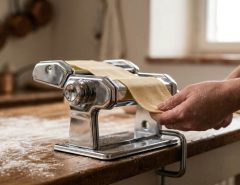
Using the Atlas 150 transforms pasta-making into a rewarding ritual. After kneading a simple dough of 00 flour and eggs, the machine rolls it into thin, uniform sheets in minutes. Switching to the fettuccine cutter produces strands that cook evenly, absorbing sauces like a dream. A user on Amazon shared how they crafted ravioli sheets for a family dinner, impressing guests with homemade quality. However, beginners may struggle with dough sticking if not floured properly. Pairing the machine with a drying rack, like Marcato’s Tacapasta, prevents noodles from clumping. For best results, start with small dough batches and gradually increase as confidence grows.
Featured Snippet: What Makes the Marcato Atlas 150 Stand Out?
Question: Why choose the MARCATO Made in Italy Atlas 150 Classic Manual Pasta Maker Machine for homemade pasta?
Answer: The Marcato Atlas 150 stands out for its durable chrome steel build, 10 thickness settings, and ability to craft lasagna, fettuccine, and tagliolini with ease. Its anodized aluminum rollers create a porous texture for better sauce adhesion. Compatible with 12 add-on attachments, it offers versatility for various pasta shapes. Users praise its smooth operation and restaurant-quality results, though beginners may need practice to perfect dough consistency. Easy to clean with a dry brush, it’s a reliable choice for pasta enthusiasts seeking authentic Italian craftsmanship.
Relevant FAQs
- Is the Marcato Atlas 150 worth the price?
Its durability, versatility, and quality justify the cost for frequent pasta makers, though casual users may find cheaper alternatives sufficient. - Can beginners use the Atlas 150 easily?
Yes, but expect a learning curve. Watching tutorials and practicing dough preparation improves results significantly. - Does it work with gluten-free dough?
It handles gluten-free dough well, but users recommend adding xanthan gum for better elasticity and preventing stickiness. - Are additional attachments necessary?
The included cutters suffice for basic pasta, but attachments like the spaghetti or pappardelle cutter expand options for enthusiasts.
Final Thought
The MARCATO Made in Italy Atlas 150 Classic Manual Pasta Maker Machine, Chrome Steel, delivers on its promise of authentic, homemade pasta. Its robust build, ease of use, and versatility make it a favorite among home cooks, despite a slight learning curve and occasional quality control issues. For those passionate about Italian cuisine, it’s a worthy investment that elevates pasta nights to a new level.
Call to Action: Ready to craft fresh pasta at home? Grab the Marcato Atlas 150 from Amazon or Marcato’s official site and start your culinary journey today! Share your pasta creations in the comments below to inspire others.

Leave a Reply